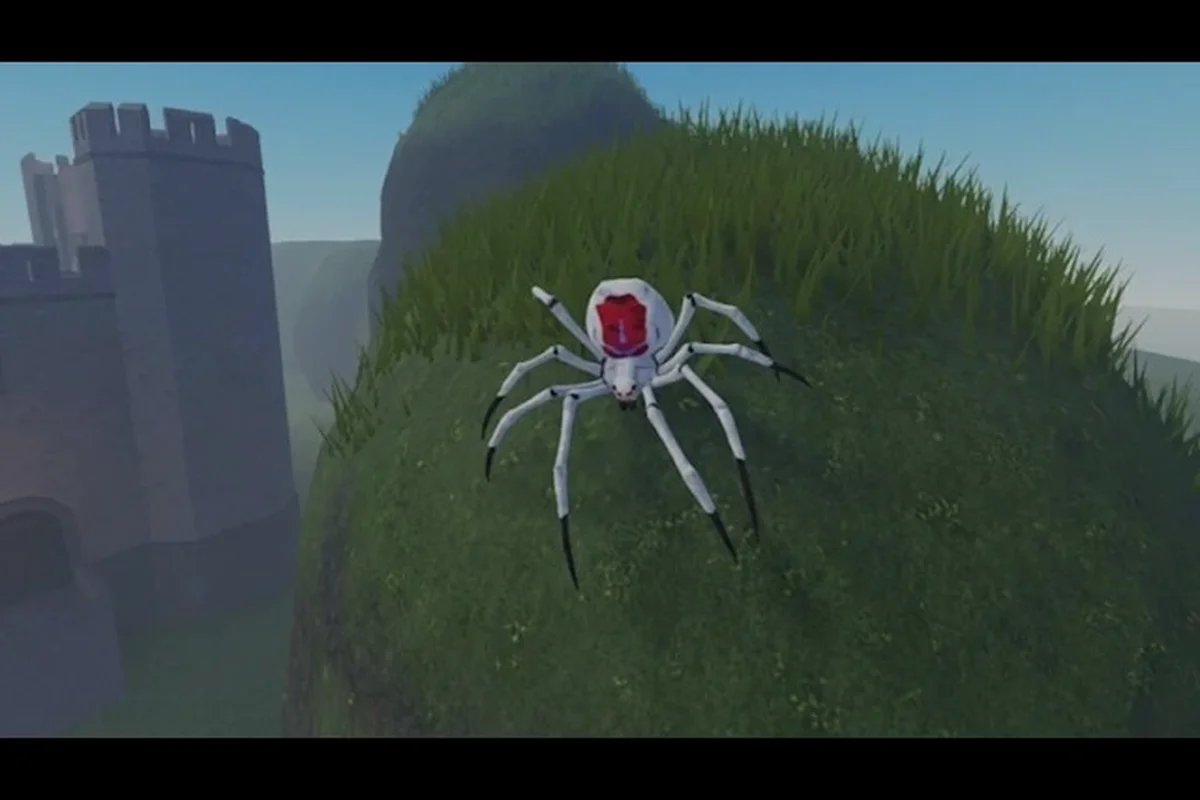
Bug evolution grass fields are the best starting hunting ground because small food is dense, the starter area is easy to reach, and the route connects naturally to stronger zones. Learn where to eat, which landmarks guide you, and when the map-edge risk outweighs the reward.
Bug Evolution Grass Fields: Why the Starting Area Works
The Bug Evolution grass fields are more than a spawn point: they are the best place to learn the game’s core loop before chasing larger prey. New spiders hatch here, find abundant starter food, and can practice eating, movement, and basic attacks without crossing the whole map. The starter region also functions as the respawn point, which makes it a practical place to reset after a risky encounter.
The first hour follows a clear progression pattern. You hatch, eat near the spawn area, pass through the early fly and base stages, work toward the level 10 spider form, and then spend coins on Bite Damage and Bite Speed. Once those basics are stable, the Bug Tree becomes the next objective, with more than 30 insect forms available over a session. A broader overview of the Bug Evolution map guide can help with region selection beyond the starter zone.
| Starter priority | Location value | Main reason |
|---|---|---|
| 1 | Dense starter grass | Learn eating without traveling |
| 2 | Spawn-area grass | Respawn nearby after danger |
| 3 | Field-to-hills crossing | Food and prey paths converge |
| 4 | Castle approach | Mid-tier route and useful landmark |
The reliable beginner loop
Start with small food inside the Bug Evolution grass fields, then move in short loops rather than sprinting toward distant food. Eat enough to advance your current form, watch the level indicator, and shift outward only when the local supply becomes thin. This keeps the early route predictable and reduces the chance of meeting an enemy while your insect is still weak.
The starter food density is the area’s defining advantage. Food availability varies between regions, but the fields contain the densest concentration of small items in the current build. That makes them the safest place to learn which food disappears quickly, how enemies react when you approach, and when a bite becomes safer than a retreat.
When to leave the spawn fields
Move away when you have a stable form, adequate Bite Damage and Bite Speed, and a clear next destination. Heading toward the field-to-hills crossing is usually better than wandering toward the outer boundary, because prey and food are more likely to move through the corridor. Save the longest trips for players who already know the route back to a respawn point.
Bug Evolution Open Field Hunting Routes
The Bug Evolution open field is the natural expansion zone after the starter grass. It offers more food variety and more competitive hunting routes without requiring an immediate trip to the desert or castle. For new players, the best strategy is to treat it as a bridge: enter from the fields, follow active food spawns, and avoid pushing deeper whenever another insect reaches the same area.
Follow crossings instead of empty ground
Dense-food crossings outperform broad, empty searches. The strongest locations are the grass fields near spawn, the edge where the hills begin, and the approach to the stone castle. These routes concentrate movement because insects are drawn to available food while larger players are hunting the same targets.
| Route segment | Food potential | Enemy pressure | Best use |
|---|---|---|---|
| Spawn grass | Very high | Low | Learning and early levels |
| Field-to-hills edge | High | Medium | First active hunts |
| Open-field interior | Medium | Medium to high | Mid-game food route |
| Castle approach | Medium to high | Medium | Navigation and ambushes |
| Far map edge | Variable | High | High-risk food search |
The field-to-hills edge is especially useful because it connects a dependable source of small prey with a larger hunting zone. Circle rather than sprint between patches, because circling preserves your options and gives you more time to react when a stronger insect enters the route.
Build a simple escape plan
Choose one recognizable feature before entering an exposed stretch: a hill, a tree cluster, or the distant silhouette of the castle. Retreat before you are surrounded, because damaged insects lose the ability to recover through a clean retreat. Community reports describe the map as compact enough that major regions can be crossed in roughly a minute or two of scuttling, although no official dimensions have been published.
A reliable sequence is to eat in the starter grass, establish a route toward the hills, claim one food cluster in the open field, and return before committing to a prolonged fight. This loop can be repeated with small variations, making it easier to learn where food respawns and where larger predators tend to patrol.
Bug Evolution Castle Area and Stone Castle Navigation
The Bug Evolution castle area is useful for orientation, mid-tier food, and finding your way across a world without a full map overlay. The Bug Evolution stone castle is one of the clearest landmarks in the current single-world map, so players should use its silhouette as a reference before exploring unfamiliar routes.
Use the castle as a fixed anchor
Because the world does not display a complete map overlay, landmarks save time. Approach the castle from the grass or hills, keep it in view, and use the surrounding roads as a return route. The Bug Evolution map layout guide provides additional context on how the castle, hills, fields, and desert relate spatially.
| Castle approach | What it offers | Caution |
|---|---|---|
| Grass-side entrance | Short route from starter food | Visible to other hunters |
| Hills-side entrance | Cover and a natural retreat line | Uneven route around slopes |
| Open-field approach | More mid-tier food options | Higher competition |
| Castle perimeter | Strong landmark and orientation point | Confined sight lines |
When the castle rewards the detour
Head toward the castle when the nearby grass has been cleared, your current form can handle a contested fight, or you need to reorient after moving toward the map boundary. Its surroundings reportedly carry mid-tier food, making the approach a reasonable extension of a field route. The castle is not a guaranteed safe zone, so avoid spending extended periods in one small food cluster.
Read the surroundings before committing
Teams can use the same approach for different purposes. One player may feed at the field-to-hills crossing while another approaches the castle, which can split attention without creating a long-distance expedition. If the castle becomes crowded, move around the perimeter rather than forcing a direct contest over a narrow entrance.
Bug Evolution Desert Area and the Bug Evolution Edge of the Map
The Bug Evolution desert area is a later-game destination with a different risk profile from the starter fields. The map also includes a Bug Evolution edge of the map where food can be valuable, but the long return journey increases the danger of becoming stranded or meeting stronger players far from the respawn point.
Treat the desert as an expansion zone
The desert is thematically connected to the Desert Sand Worm boss, which is listed for the November 9 update. As of October 30, 2026, the boss is not yet part of the published current build, so players should not treat the desert as a confirmed boss arena yet. The separate Bug Evolution boss guide can be consulted when the associated content becomes verifiable.
| Desert consideration | Current guidance |
|---|---|
| Food availability | Do not assume it matches starter-field density |
| Enemy strength | Expect more risk outside the grass fields |
| Respawn distance | Plan a route back before overextending |
| Sand Worm content | Scheduled for the November 9 update |
| Exact rewards | Not confirmed in the current build |
Avoid blind map-edge searches
The Bug Evolution edge of the map can be efficient when a player knows the local food pattern, but it is a poor destination for an unprepared weak insect. Without a full map overlay, crossing unfamiliar terrain may cost more time than the food saves. Eat enough to sustain a return trip, identify the castle as a recovery landmark, and avoid committing your final available food to a distant cluster.
The safer edge strategy is a short excursion. Move out from a known route, collect a moderate amount of food, and return before taking a difficult fight. If another player arrives, disengage rather than defending a remote pile. The longer the distance from the starter fields, the more important that rule becomes.
Bug Evolution Underground Cave: Upcoming Area Status
There is no accessible Bug Evolution underground cave in the open build as of October 30, 2026. It is an announced map arrival scheduled for November 19, so current players should treat it as future content rather than a usable hunting location. Planning around it can still help, but any claimed cave entrance or cave loot route is not verified for the current version.
What is confirmed
The cave is listed on the game’s roadmap with a November 19 arrival date. That timing may change as development continues, so players should verify the live build before making travel plans. The broader Bug Evolution upcoming map overview tracks the difference between released terrain and announced areas.
| Underground cave topic | Verified status |
|---|---|
| Accessibility | Not available in the current open build |
| Planned arrival | November 19, 2026 |
| Food density | Not confirmed |
| Enemy types | Not confirmed |
| Connection to the desert or castle | Not confirmed |
| Exact entrance routes | Not confirmed |
Prepare without relying on unverified details
Players can prepare by learning the current world’s food and respawn system, but they should not search for a cave entrance that the public build does not contain. Treat player-made videos or forum descriptions as early information rather than a reliable route guide. When the cave arrives, its entrances and food distribution may be easier to identify through the Bug Evolution upcoming events tracker, which covers announced cave and desert content.
A practical update check
After November 19, confirm three details before revising the route: whether a visible entrance appears, whether the cave connects to another region, and whether respawning remains tied to the original starter fields. Those answers determine whether the cave is a useful extension or an expensive one-way excursion.
Route Planning by Player Stage
The best route changes as the insect grows. Starter players should remain near dense food, intermediate hunters can exploit crossings, and advanced players can use the castle and desert while maintaining a reliable return line. The table below turns those stages into concrete actions rather than a general recommendation to explore.
| Player stage | Primary route | Secondary destination | Main objective |
|---|---|---|---|
| Newly hatched | Starter grass | Immediate spawn grass | Reach the first stable form |
| Early levels | Grass-to-field loop | Hills edge | Build levels and bite upgrades |
| Mid-game | Open-field crossings | Castle approach | Secure mid-tier food |
| Late-game | Desert outskirts | Castle perimeter | Hunt while preserving retreat |
| Edge expedition | Short field-to-edge route | Return toward castle | Collect without stranding yourself |
Build a two-location routine
A two-location routine is more dependable than chasing every visible food cluster. Use the Bug Evolution grass fields as the home base and the open field as the expansion point. Keep one route for gathering food and another for hunting, so a contested area does not interrupt the entire cycle.
The same principle applies at the castle. Eat around the approach, watch for activity near the entrance, and retreat toward familiar terrain. This is especially important in a team setting because opponents may use the same landmark that you use for navigation.
Know when the route stops paying
Stop expanding when food gains are smaller than the time spent traveling. That usually occurs near the Bug Evolution edge of the map, where the return journey can exceed the value of a small food pile. It can also happen at busy castle entrances when another player controls the approach.
A compact map makes short, repeatable circuits better than ambitious expeditions. The aim is not to visit every region before evolving; it is to maintain a safe route from the starter fields into slightly more dangerous food zones. This produces steadier early progression and leaves the desert and future cave for when they match the player’s strength.
Frequently Asked Questions
Where should a new player hunt in Bug Evolution?
New players should begin in the Bug Evolution grass fields, where starter food is densest and the respawn point remains nearby. Eat small food, advance through the early insect forms, and buy Bite Damage and Bite Speed before extending your route toward the open field or hills.
Is the Bug Evolution stone castle safe for beginners?
The castle is useful for orientation and mid-tier food, but it is not a guaranteed safe zone. Early players should approach from the grass or hills, avoid crowded entrances, and use the surrounding terrain to retreat if a stronger insect appears.
Can players reach the Bug Evolution underground cave now?
No. As of October 30, 2026, the underground cave is announced but not accessible in the current open build. Its listed arrival date is November 19, so check the live game after that date because entrances, enemies, and rewards remain unconfirmed.
Is the Bug Evolution desert area worth visiting?
The desert is a viable later destination, but players should not expect the same food density as the starter fields. The Desert Sand Worm content is scheduled for November 9, so treat the area as an expansion route and verify current enemy activity before making a long trip.
Where is the safest place to find food near the map edge?
The safest edge strategy is to make a short excursion from a known route, collect a moderate amount of food, and return before risking a fight. The Bug Evolution edge of the map can be productive, but it offers less margin for error than the grass fields and field-to-hills crossing.
Bug Evolution grass fields remain the foundation of an efficient run: they provide abundant beginner food, quick access to respawning, and natural routes toward the open field, hills, castle, and desert. Master those nearby loops first, use recognizable landmarks to stay oriented, and save distant or announced areas for a stronger insect with a dependable return path.