Guides
Step-by-step Bug Evolution guides and walkthroughs: hatch your spider, read the HUD, grow on the Bug Tree and master your first hour without wasting early minutes.
Introduction
The Guides hub is the fastest on-ramp to Bug Evolution on Roblox. Every article here starts from the same truth: you begin as a tiny spider, you eat to grow, and the Bug Tree turns that growth into 30+ insect forms. The hub collects the exact order of operations that works — hatching, reading the HUD, farming coins, evolving at the right level and, finally, contending for King of the Server. The guides are written to be standalone, so you can deep-dive into the Bug Tree, the insect roster or the coin economy without reading everything first. Above all, the hub is built to keep pace with a young game: whenever a patch lands, the guide team re-checks the numbers so the page you relied on yesterday still matches today's Bug Evolution.
Bug Evolution Guides Quick Reference
| Guide | Audience | Time to Read | Key Result |
|---|---|---|---|
| Beginner Guide | New players | ~10 min | Survive the first hour |
| How to Evolve | All players | ~8 min | Understand the Bug Tree |
| Insect List | Collectors | ~12 min | Know every form |
| Coins & Leveling | Growers | ~10 min | Outpace the server |
| Bosses & PvP | Competitive | ~9 min | Claim the crown |
Core Guide Topics
Bug Evolution Beginner Guide
The complete first-hour walkthrough for new players, from hatching to first evolution.
How to Evolve on the Bug Tree
Master the tiered Bug Tree: T1 to T6, the LVL milestones and the T3 branches.
Insect List & Statistics
The growing register of 30+ insects and spiders with their five stat bars.
Coins & Fast Leveling
The fastest coin routes and upgrade orders for outpacing your server.
Bosses & King of the Server
PvP tactics, team hunting and the exact path to the server crown.
Core Mechanics
The guides reference the game's shared core loop: spawn as a spider, eat food to grow bigger and stronger, level up by accumulating growth, and spend coins on shop upgrades that modify your five stats — Speed, Health, Bite Damage, Bite Speed and Stamina. Evolution happens on the Bug Tree, where tiered nodes from T1 to T6 unlock new insect forms at level milestones. Every guide assumes this loop, then layers on the specific knowledge you need — food routes for beginners, tier logic for evolution, coin math for leveling, and match tactics for PvP and server crowns. Readers who want the full fallback on any system — the five bars, the shop, the tree — can jump to the dedicated mechanics hub, while these guides focus on applying the basics without repeating every formula.
Advantages
A coordinated guide hub shortens your learning curve dramatically. Instead of experimenting with every food source and upgrade, you get a tested order of operations that avoids classic new-player mistakes like wasting opening coins on the wrong upgrades or evolving too early. The guides are written free-to-play friendly, so every tip works whether you spend Robux or not. Because each article names exact map areas, level milestones and upgrade priorities, you can measure your progress instead of guessing. The step-by-step format also makes it easy to share with friends who join the game late, so your whole group levels together at the same pace.
Challenges
The game is young and updating quickly, which means some guide details — exact stat values, precise spawn rates and final Bug Tree node names for the deepest tiers — are still community-verified rather than official. The deepest T4-T6 nodes appear locked with question marks, so guides cannot name every final form yet. Readers should expect minor drift between articles after each patch and cross-check time-sensitive numbers with the latest update notes on the official game page. The category is honest about that ceiling: guides say 'community-verified' where official data stops, which keeps the wiki useful without pretending to know what the game has not published.
Frequently Asked Questions
What should a brand-new player do first in Bug Evolution?+
How long does it take to reach a first evolution?+
Which guide should a returning player start with?+
Are the Bug Evolution guides free-to-play friendly?+
Quick Tips
Follow the food, not the fight, in your first hour. Coins come from outlasting weaker insects and hunting, but consistent eating is what pushes your level toward the first spider evolution — spend your opening minutes mapping grass-field food spawns instead of chasing rivals. Pathing matters more than fighting: learn where food clusters respawn in the grass fields and rotate between two or three known spawn pockets instead of wandering.
Spend early coins on health and bite-speed upgrades. Research and community footage both point to survivability and attack speed paying off before raw damage, which keeps your spider alive long enough to farm, level and eventually evolve on the Bug Tree. Do not blow coins the moment they appear. Keeping a small bank lets you snap up the next health or bite-speed upgrade the second a farming run ends, which keeps your power curve climbing.
Group up when the server gets crowded. Matching into the same 15-player lobby with friends multiplies your hunting efficiency, because teammates can secure food spawns and cover you while you grow — the team-hunting route is consistently faster than solo for most players. If you play solo, stick to the quieter edge routes until your size advantage is obvious — the crown is won by growth momentum, and momentum is easiest to keep away from contested hotspots.
Check the event calendar before your next session. The roadmap lists the Giant Mosquito enemy, the Desert Sand Worm boss and the Underground Cave map across November, so timing your grinds and your evolution goals around those updates keeps you ahead of the curve. Use patch dates as natural session resets: after a November update, re-check the beginner guide and the progression hub, because new insects can quietly change which early evolutions are worth the walk.
Featured
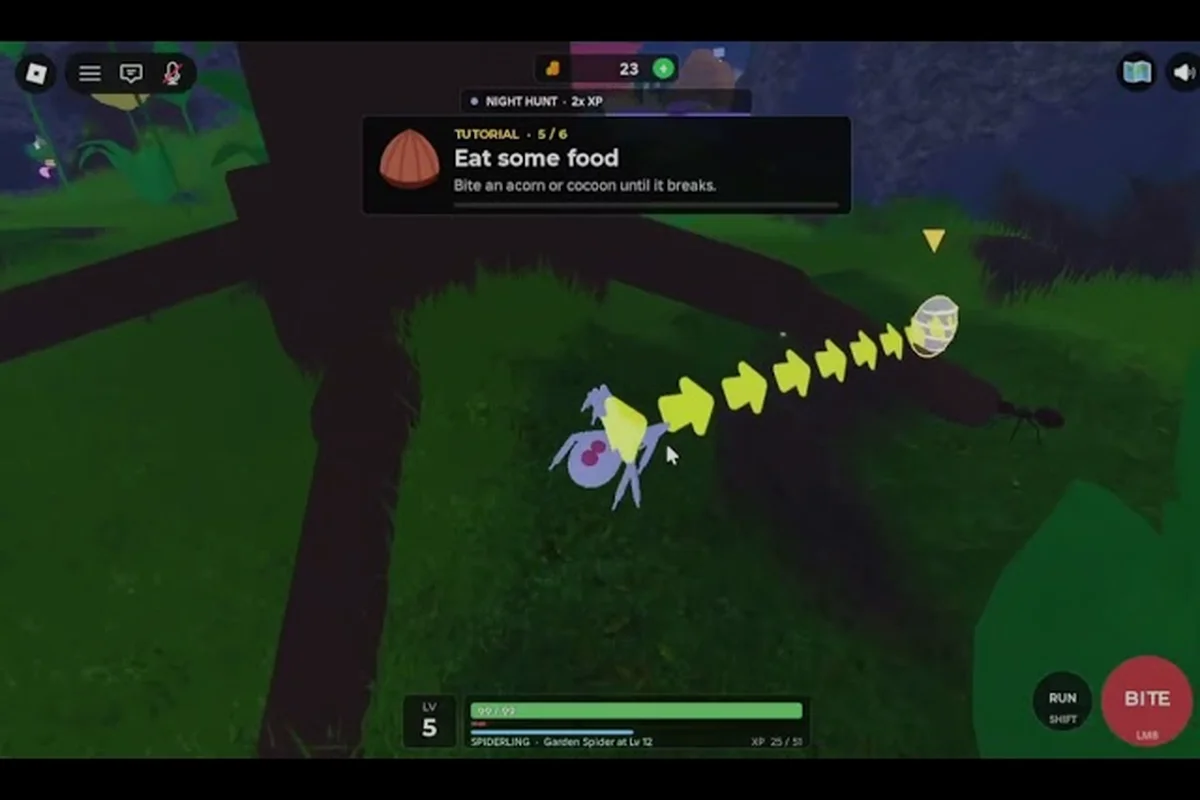
Bug Evolution Controls and UI Guide for PC Players
Learn Bug Evolution controls and key interface details for PC, including movement, eating, upgrades, and shortcuts that support smoother sessions.
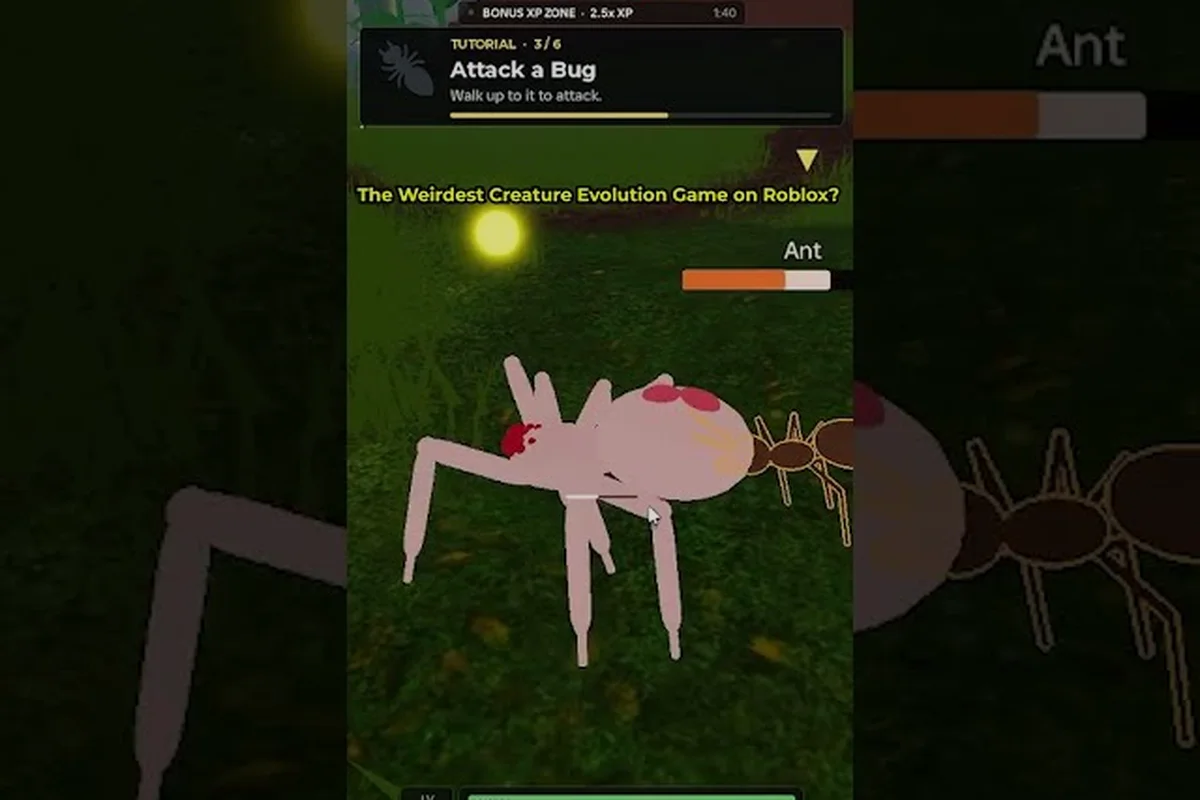
Bug Evolution How to Progress Faster in Every Stage
Learn how to progress in Bug Evolution with efficient food farming, smart upgrade timing, and stage-by-stage tactics for consistent growth.
Bug Evolution Roblox Beginner Guide: Hatch, Eat, and Grow
Start this Bug Evolution Roblox beginner guide with clear steps for hatching a spider, gathering food, avoiding danger, and planning your first growth route.
All Articles
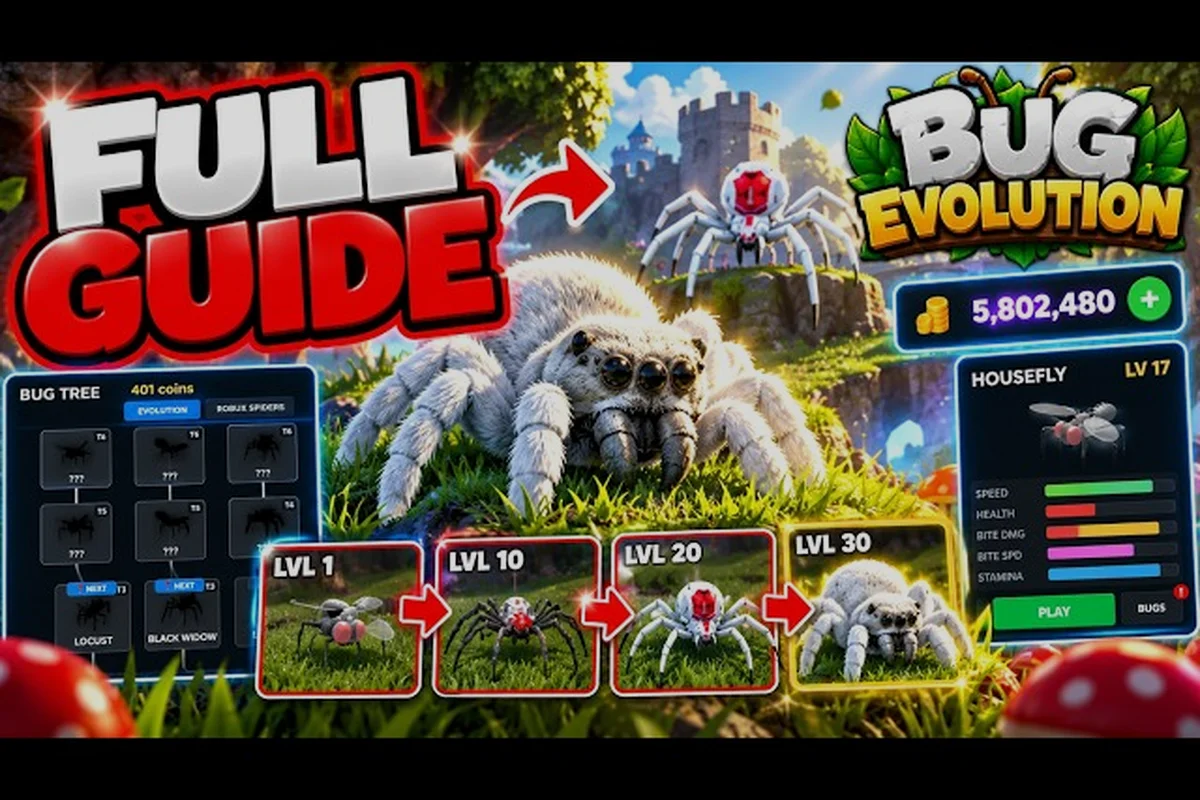
Bug Evolution Team Guide for Better Multiplayer Runs
Coordinate with friends in Bug Evolution using practical team roles, shared food strategies, and clear objectives for stronger multiplayer progression.
Bug Evolution Complete Guide to Every Core Gameplay System
Learn Bug Evolution from hatch to final evolution with clear instructions on food, upgrades, survival, and the systems every new player must master.
Bug Evolution Endgame Guide: Master Final Evolution Routes
Master the Bug Evolution endgame guide by comparing final paths, timing food and upgrades, and choosing safer routes to the strongest insect form.
Bug Evolution How to Win as a Solo Survivor
Discover how to win Bug Evolution solo by mastering food collection, safe evolution choices, efficient upgrades, and smart survival tactics.
Bug Evolution Things I Wish I Knew: Avoid These Errors
Explore Bug Evolution things I wish I knew to avoid costly mistakes, improve food routes, fight more safely, and choose upgrades that accelerate early progress.
Bug Evolution What to Do First for a Strong Start
Learn what to do first in Bug Evolution, from hatching and feeding to early upgrades, smart evolution choices, and safer combat.
Bug Evolution Mobile Controls and Menu Tips
Master Bug Evolution mobile controls, menu navigation, and quick interface tips so eating, moving, and managing upgrades feels smooth on touchscreens.