Insects
Every insect and spider in Bug Evolution — housefly, tarantula, black widow and prehistoric beasts — with Speed, Health, Bite Damage, Bite Speed and Stamina stats.
Introduction
The Insects hub is the encyclopedia of every bug you can become in Bug Evolution. The confirmed roster runs from your starter spider and the common housefly through moths, grasshoppers and tarantulas, then climbs to black widows, locusts and the giant prehistoric beasts that dominate community tier lists. Each article in this category documents how a form plays, where it sits on the Bug Tree, what it takes to unlock and how its five stat bars change your match strategy. Because the developer promises a new insect with every update, this hub is the first page to check after any patch.
Bug Evolution Insect Roster
| Insect | Tree Tier | Role | Where It Shines |
|---|---|---|---|
| Spider | T1-T2 | Starter form | First evolution around LVL 10 |
| Housefly | T1 | Early insect | Teaches opening statbars |
| Moth / Grasshopper | T2 | Mid-tree forms | Fast early growth |
| Black Widow | T3 | Branch choice | Strong spider line |
| Locust | T3 | Branch choice | Alternate T3 path |
| Prehistoric Beast | Deep tree | Late-game giant | Top of the meta |
Confirmed Insect Entries
Starter Spider
The form every player hatches as, with the whole Bug Tree opening above it.
Housefly
A quick early insect whose stat bars define your opening play.
Tarantula
A heavy spider form with strong bite potential late in the tree.
Black Widow
A T3 Bug Tree branch that appears as a named next evolution.
Prehistoric Beast
Giant late-game forms listed among the 30+ evolvable insects.
Locust
The other T3 branch shown as a next evolution option on the tree.
Core Mechanics
Insects are not cosmetic skins — each form is a game state with its own five-bar stat profile: Speed, Health, Bite Damage, Bite Speed and Stamina. Forms exist at specific Bug Tree tiers, so the insect you can play is capped by your evolution progress. The starter spider line unlocks at the bottom of the tree and branches at T3 into Black Widow or Locust, while the deepest tiers reveal locked question-mark nodes. Leveling the spider line past milestones such as LVL 10 and LVL 20 opens progressively stronger body types, and late-game forms like the prehistoric beasts represent the current top of the power curve.
Advantages
A complete insect database prevents wasted evolution. Instead of blindly climbing whichever branch looks interesting, you can check each form's tier, playstyle and the requirements to unlock it before spending your progress. Knowing that the T3 fork offers Black Widow versus Locust lets you plan your whole mid-game. The hub also flags which forms the community currently considers top tier, so you can see what experienced players actually evolve toward rather than guessing from raw numbers. With the confirmed roster in hand, you can build a personal evolution checklist instead of leveling blind. The central value is decision-speed: within seconds you can tell whether a form is a quick stepping stone or a credible long-term pick, which turns evolution from guesswork into an informed plan every single session.
Challenges
The insect universe is still incomplete. The deepest Bug Tree tiers are shown as locked question-mark nodes, so the final T4-T6 forms cannot be named yet, and the wiki deliberately avoids inventing species. Official stat values are also thin — the five stat bars exist in-game but precise numbers are not published, so the database describes forms by relative profile (quick early insect, heavy late spider) rather than fabricated exact digits. Collector guides must therefore be treated as living documents that only become fully precise as the game reveals more data. The counterweight is discipline: the wiki will not name forms that the game hides behind its locked question marks, so collectors should treat the confirmed roster as the floor of reality, not the full future list.
Frequently Asked Questions
How many insects are in Bug Evolution?+
Which insect should a new player choose first?+
What is the strongest insect in the game?+
Do insects have different stats?+
Quick Tips
Learn the five stat bars before optimizing. Speed, Health, Bite Damage, Bite Speed and Stamina decide how an insect feels and what it is good at — read them on the stats panel before deciding whether to fight, run or chase food. Keep a mental map of the roster tiers as you play: the spider, housefly and moth occupy the early tree, while tarantulas and prehistoric beasts only show up after deep progression.
Treat the first 10 levels as a spider tutorial. The starter spider's first major evolution lands around level 10, so treat that climb as practice: learn food routes, practice biting and banking coins while your downside is still tiny. When you unlock a new form, spend your first match re-reading the stats panel — the five bars tell you how the form wants to be played, so adjust your route before grinding on.
Pick your T3 branch on purpose. At T3 the tree offers the Black Widow and Locust branches — choose based on how you play. Prefer tankier spider strength? Black Widow. Prefer a different body type for adaptability? Locust is the alternate route. If you already know your endgame form, work backward: choose the T3 fork (Black Widow or Locust) with that final form in mind, because the branch you take narrows what the deep tree offers.
Do not chase prehistoric beasts on day one. The giant late-game forms are the community's top tier, but they sit deep in the Bug Tree behind long grinds — chase them after you have stabilized coins and a solid mid-game form on the spider line. Collector guides move fast after patches — the developer promises a new insect with every update, so the 30+ count itself is a moving target and the roster page is re-checked after each drop.
Featured
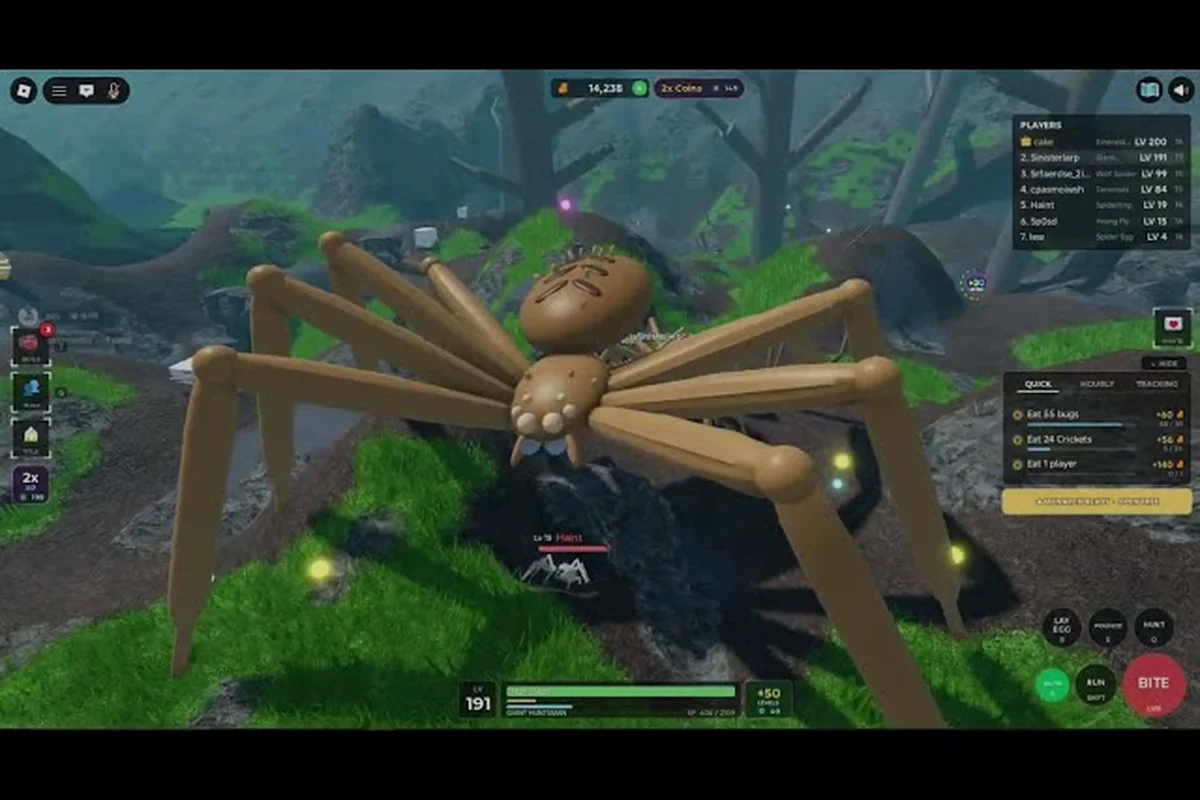
Bug Evolution All Insects: Complete Roster and Details
Explore Bug Evolution all insects with a roster covering black widow, white spider, rare species, unlockable types, and Bug Tree progression.
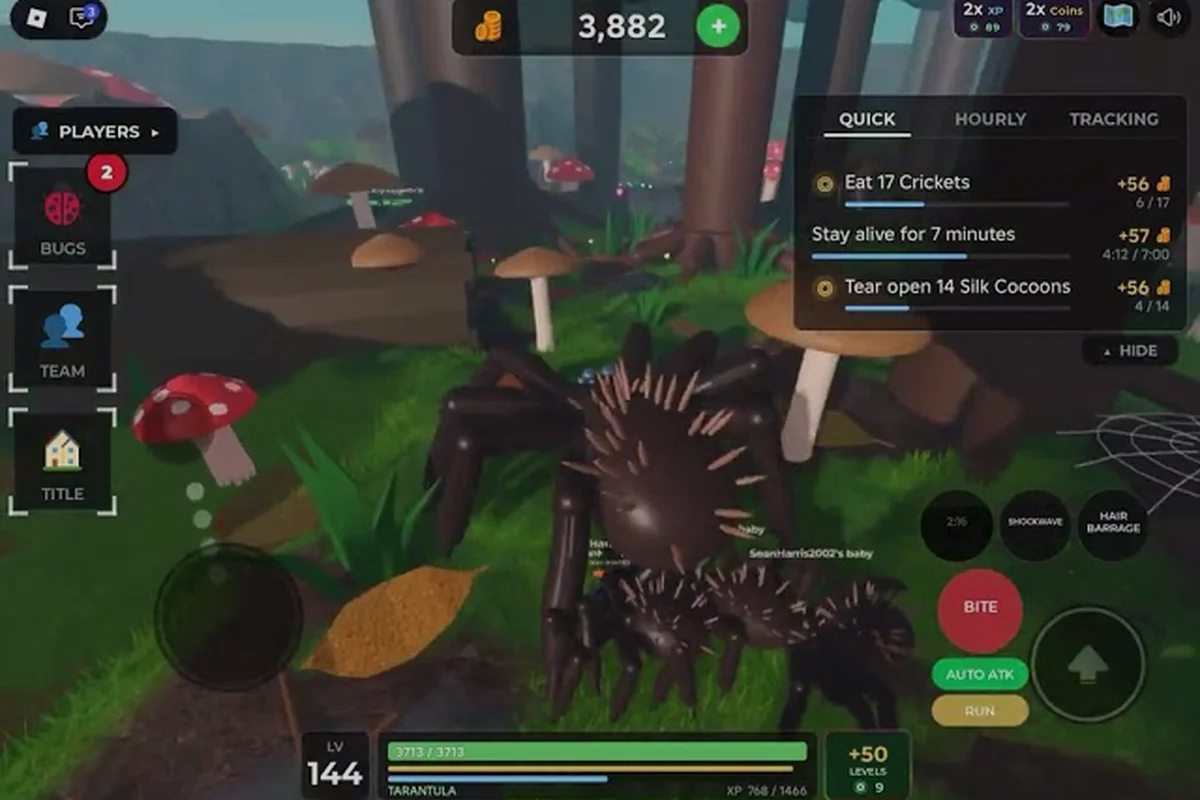
Bug Evolution Fly: 30 Insects, Moths, and Grasshoppers
Learn about the Bug Evolution fly alongside the 30-insect roster, including moths, grasshoppers, tarantulas, and locusts.
Bug Evolution How Many Insects: Full Collection and Types
Find out how many insects Bug Evolution includes, with details on flying species, rarities, progression, and the biggest bug.
All Articles
Bug Evolution Insect Size: Roster, Unlocks, and Bugs
Explore Bug Evolution insect size records across spiders, houseflies, and other unlockable insects in the complete insect roster.
Bug Evolution Insect Stamina: Rarity, Names, and Survival
Understand Bug Evolution insect stamina alongside rarity, species names, new bugs, and practical tips for reaching every insect.
Bug Evolution Red and White Spider: Rare Form and Abilities
Discover the Bug Evolution red and white spider, its rare status, related prehistoric beasts, and how giant or secret insects compare.
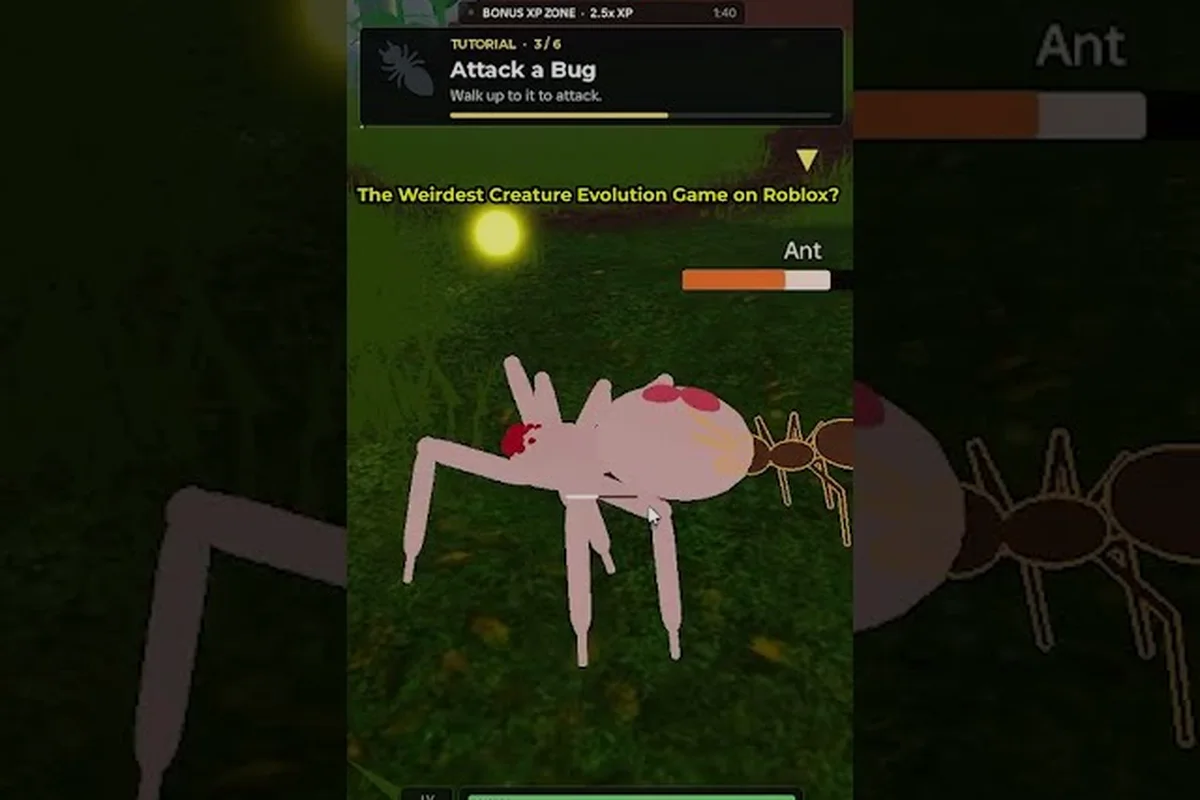
Bug Evolution Strongest Insect: Best Stats and Starter Picks
Compare Bug Evolution strongest insect candidates by health, speed, bite damage, and the best starter options for your first run.