Bug Evolution next evolution planning matters because each Bug Tree choice determines which insect forms remain available and influences your growth speed. The confirmed evolution tiers, level gates, T3 branch, and highest reachable form should be checked before committing to a route, since choosing one node can close off later Bug Tree options and alter how efficiently you reach the final evolution.
Bug Evolution Next Evolution Overview
Bug Evolution is a new 2026 Roblox survival and evolution game developed by Corgi Crew. You begin as a tiny spider-like creature, eat scattered food, defeat smaller insects, and use the growth bar to raise your level. Your level determines which entries on the Bug Tree become available, so understanding the next evolution prevents wasted food and accidental branch choices.
The Bug Tree currently spans tiers T1 through T6. Confirmed early forms include the Housefly in T1, Spider variants in T2, and separate Locust and Black Widow branches in T3. The upper tiers are displayed as locked placeholders, so claims about specific T4–T6 species should be treated cautiously until Corgi Crew officially names them.
| Bug Tree area | Confirmed content | Unlock evidence | Planning priority |
|---|---|---|---|
| T1 | Housefly and basic starting forms | Available early | Build a safe food-and-level base |
| T2 | Spider development row | Level milestones begin | Decide whether to evolve immediately |
| T3 | Locust and Black Widow branches | First major split | Compare movement and combat roles |
| T4 | Locked deep-stage node | Higher level required | Save resources before entering |
| T5 | Locked deep-stage node | Higher level required | Follow updated official naming |
| T6 | Locked upper tier | Highest level milestone | Treat as the current max target |
The table above separates verified information from placeholders. For a wider look at the branching system, the complete evolution guide explains why the tree is not a straight upgrade line and how each selection affects the forms that follow.
Current Progression Snapshot
As of October 30, 2026, community-reported Roblox statistics showed more than 3.9 million visits, roughly 20,800 concurrent players, and 20,645 favorites. Those figures indicate an actively growing audience, but they are not permanent progression totals. The game had also received a store update on October 29, which means the interface and unlock pacing may continue to change.
The safest way to plan bug evolution next evolution is to combine three sources of information: current progression totals, recent Roblox store updates, and the live Bug Tree node requirements. Community figures such as 3.9 million visits, roughly 20,800 concurrent players, and 20,645 favorites provide a broad snapshot of the game’s active audience, but they do not reveal whether a specific bug evolution stage has reached its unlock threshold. The October 29 store update also suggests that interface and unlock pacing may shift, so older community footage should be treated as a reference point rather than definitive proof. For the next evolution, prioritize the current insect name, the visible requirement on the relevant Bug Tree node, and the next form’s displayed attributes; this keeps the plan grounded in your actual account and current patch instead of relying on potentially outdated progression totals.
-
Read the level displayed beside your current insect name.
-
Check the Bug Tree node itself for its requirement.
-
Compare the next form’s visible attributes with your current build.
Because community footage can lag behind a patch, the in-game interface is the best authority for your current session when tracking bug evolution next evolution. For example, an older video may show a Bug Tree node as locked even though the October 29 store update has already activated it for your account, while another node may still require more levels or a different insect form. This distinction matters for identifying bug evolution max evolution, bug evolution final evolution, and bug evolution evolution levels explained: compare the live node requirement, your current insect name, and the next form’s displayed attributes rather than treating a video timestamp as proof that a stage is unavailable.
Bug Evolution Evolution Levels Explained
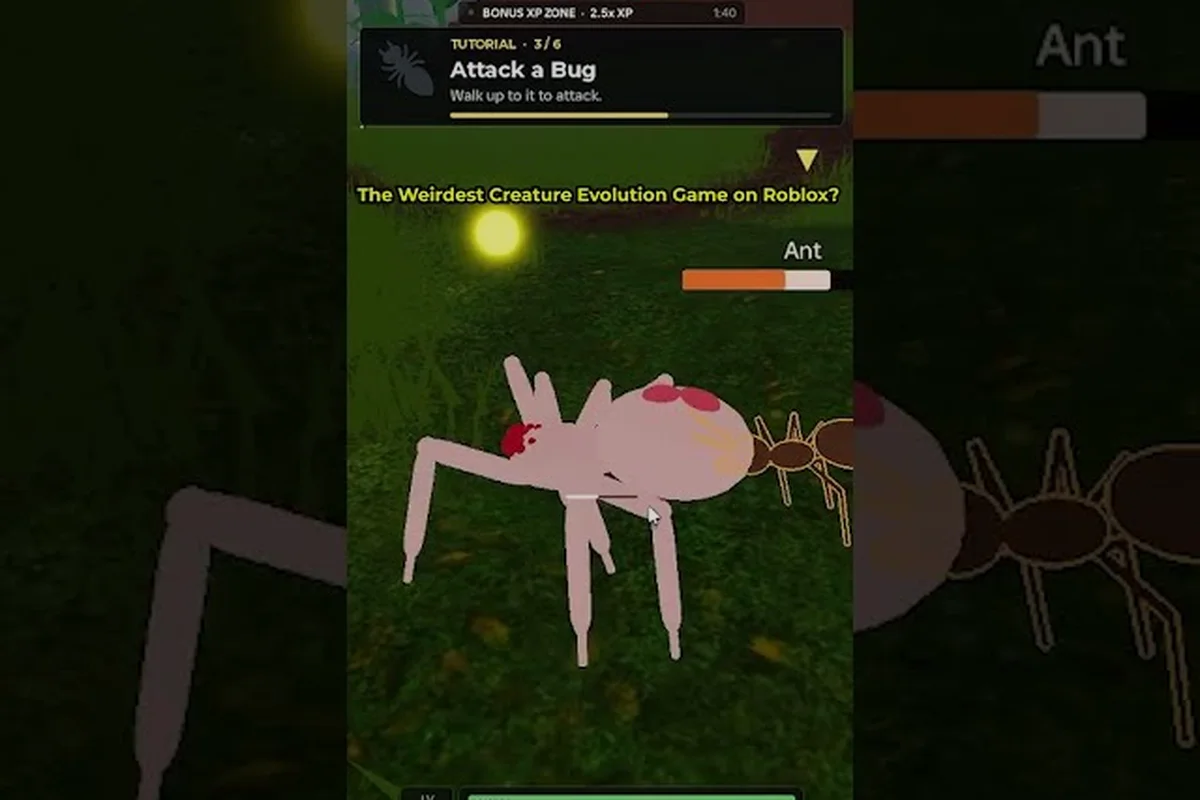
Levels come from eating and successful survival. Each bite, kill, and consumed item contributes growth progress, and reaching a milestone grants growth points while opening new Bug Tree options. The visible early milestones include level 10 for the Spider stage, level 20 for the red-and-white Spider, and level 30 for a white-fluffy spider. Later nodes require still higher levels.
| Milestone | Confirmed tree result | Player action |
|---|---|---|
| LV 1 | Starting insect and early progress | Eat continuously and avoid risky fights |
| LV 10 | Spider stage from the fly base | Open the Bug Tree and select the eligible node |
| LV 20 | Red-and-white Spider | Check stats, then commit to the next branch |
| LV 30 | White-fluffy spider | Compare available upper routes before evolving |
| Higher levels | T4–T6 progression toward max evolution | Bank resources and follow the live tree |
This progression makes bug evolution evolution levels explained a practical planning problem rather than a simple list of numbers. A level does not force a specific form in every branch, but it determines whether nodes can be inspected or selected. Saving progress immediately before evolution can therefore make the new form feel much weaker than it should.
Why Progress Resets After Evolving
Selecting a new form locks the current form’s growth channel and starts the newly selected insect at its base power. That transition matters because the level requirement may remain met while some of the form’s potential is temporarily reduced. Players report the strongest results by reaching the threshold, confirming the node, and then rebuilding progress under the new insect.
A practical sequence looks like this: first, confirm that the current insect has reached the required evolution level, then compare the Bug Tree’s available nodes instead of selecting the first affordable option. A higher-tier node may change the insect’s growth channel, so the real decision is not simply which unlock costs more, but which form fits the resources you can gather afterward. This is especially important when planning a bug evolution max evolution run, because the transition resets growth progress and can temporarily leave you weaker than the form you just replaced.
-
Eat until the growth bar reaches the next required level.
-
Open the Bug Tree and read every available node on the intended route.
-
Bank coins and nearby food before making the irreversible selection.
-
Evolve during a quiet moment rather than during a difficult fight.
-
Resume eating immediately to restore the new form’s growth progress.
This method is especially useful when planning a bug evolution max evolution timing run because the level gate and the selection moment serve different purposes. Meeting the required evolution level only unlocks the Bug Tree; it does not guarantee that the next node is safe to activate. Keep the current insect’s growth channel unchanged until you have compared the available Bug Tree nodes, banked coins and food, and identified a safe route toward bug evolution final evolution. For example, if a T3 node becomes affordable while enemies are still contesting nearby food, delay the transition without delaying further leveling. Once the route is secure, confirm the node, evolve, and reserve enough food to rebuild the new insect’s growth progress immediately.
Bug Evolution Bug Tree Nodes and T3 Choices
Bug evolution bug tree nodes form a branched tree rather than a ladder. T1 begins with basic forms such as the Housefly, T2 introduces the Spider row, and T3 splits into Locust and Black Widow. Once you choose a T3 route, later options remain on separate branches, making this the first decision with a meaningful strategic consequence.
| T3 branch | Best fit | Practical advantage | Main caution |
|---|---|---|---|
| Locust | Fast, mobile players | Stronger movement-oriented play | Do not choose only for assumed late-tier power |
| Black Widow | Combat and control players | Distinct spider identity and branch identity | Check the live node requirements before committing |
| Earlier tier | Undecided players | Keeps more immediate form familiarity | Still uses the same irreversible selection system |
The T3 comparison should be based on the current UI rather than community labels for unknown species. Community reports identify Locust and Black Widow as the two T3 branches, but names shown by players for T4–T6 are not official. Using the Bug Tree tier guide can help you distinguish confirmed nodes from fan-created labels.
Making the T3 Decision
Your current level may make only one branch accessible, but that does not mean the choice is forced for every account. If both branches are available, consider how you gather food. A form that keeps you mobile can help collect scattered resources and escape stronger creatures, while a heavier form may make short, controlled encounters easier. The correct option depends on play style because the game’s upper tiers remain visually locked.
Bug evolution bug tree t3 planning should also account for nearby player competition. A popular branch may have more insects using the same food routes, but community footage is too limited to support a firm conclusion that one branch is always more efficient. Track your own survival time, food intake, and win rate instead of relying on an unverified tier ranking.
Spotting a Misleading Route
Some community videos label the highest rows with dramatic species names even though the official tree shows “???” placeholders. Those labels may reflect a player’s guess or a temporary custom name. Before planning toward a supposed bug evolution final evolution, verify three details in the live interface: the node is unlocked, its level requirement is visible, and the species label is confirmed rather than inferred from fan terminology.
Bug Evolution Max Evolution Route Planning
The current maximum structure is T6, but the official interface does not publicly identify every species from T4 through T6. For a bug evolution max evolution route, the reliable plan is to reach every confirmed milestone, preserve resources between transitions, and follow the live node path rather than assuming that T6 is one universal form.
| Route stage | Recommended preparation | Reason |
|---|---|---|
| Before T1 transition | Eat steadily and learn the map | Early food is needed for the first level gate |
| Before T2 transition | Bank food near the tree and check the node | Spider growth starts at base power |
| Before T3 transition | Compare Locust and Black Widow | The branch affects later availability |
| Before T4 transition | Maintain a strong growth buffer | Upper nodes use higher level milestones |
| Before T5 and T6 | Follow live requirements after each update | Deep-tier names and details remain unconfirmed |
The practical answer to “what is the maximum form?” is therefore T6, the highest visible tier in the current tree. That distinction prevents invented species names from being presented as official facts. For detailed tier-by-tier planning, the Bug Tree progression reference keeps the known and unknown portions separate.
Resource Banking Between Tiers
Coins remain visible in the interface, but the Bug Tree uses eligible nodes rather than paying a simple coin fee for every evolution. Still, keeping coins is useful because they are part of the broader survival economy and may support purchases, temporary boosts, or other progression systems. Food is the more immediate priority because it fills the growth bar that controls leveling.
Before triggering your next Bug Tree evolution, build three separate reserves for food, coins, and positioning. Food should cover the growth bar of the form you are about to unlock, while coins protect your broader survival economy from being depleted at the first available node. Position matters because opening the Bug Tree in a crowded area can interrupt the recovery period. This preparation is especially important for a Bug Tree T3 transition, where the new form may need more food and time to stabilize than the previous one.
-
Food buffer: enough nearby items to rebuild the new form’s progress.
-
Coin buffer: retain a reserve instead of spending everything at the first available stop.
-
Position buffer: move to a low-traffic area before opening the Bug Tree.
This routine also reduces the temptation to select an inaccessible-looking Bug Tree node. Deeper nodes may require specific prerequisites, level thresholds, or higher food consumption, so leave them untouched until those listed requirements are satisfied. For example, if a max evolution node requires the evolved form to reach a target level, evolving early can leave the new form underleveled and vulnerable while its growth bar refills. In that situation, clear the current Bug Tree tier first, gather enough food for the next form, and only then choose the deeper node for your next evolution.
Handling Game Updates
Because Bug Evolution is new, balance and interface changes can affect a route quickly. The game’s recent store activity makes community experience less consistent than a mature title’s. Review the update history before rebuilding an entire plan, particularly if a milestone moves, a node’s requirement changes, or the upper tiers gain official names.
Efficient Bug Evolution Next Evolution Strategy
The fastest reliable route is preparation-based rather than speed-based. Move toward a safe food source, consume until the growth bar is nearly full, inspect the intended branch, and evolve before taking another high-risk fight. This routine keeps food conversion high and reduces the vulnerable period immediately after changing forms.
| Priority | Player action | Result |
|---|---|---|
| 1 | Eat consistently between fights | Builds level progress safely |
| 2 | Check the Bug Tree before the threshold | Prevents an unwanted branch choice |
| 3 | Bank food and coins | Speeds up recovery after evolution |
| 4 | Evolve in a safe area | Reduces the chance of losing progress |
| 5 | Rebuild the growth bar immediately | Restores the new form’s base power |
| 6 | Recheck T4–T6 requirements | Avoids relying on outdated community labels |
This strategy can improve bug evolution next evolution efficiency without promising a fixed timer. Survival, competition, and current level all influence the real pace. A player who spends less time exposed often earns more progress per minute than one who rushes every available fight.
Choosing Between Greedy and Safe Play
Greedy play means taking food from contested areas or attacking creatures beyond your current strength. It can accelerate progress when successful, but a defeat removes your insect and likely interrupts the current growth cycle. Safe play focuses on predictable food routes and controlled targets, producing steadier progression with fewer setbacks.
The best balance changes by tier. Early levels usually favor safe accumulation because the first nodes unlock quickly. Around T3, test the branch that suits your movement and combat style. At upper tiers, where requirements are higher, conservative resource banking becomes more valuable because each recovery period may take longer.
A useful tracking sheet includes the current level, intended next node, food percentage, coin balance, and whether the player is safe. This simple routine makes it harder to accidentally evolve after a confusing encounter. It also provides better data for community discussions than a general claim that one form always progresses fastest.
Bug Evolution Final Evolution Expectations and FAQ Preparation
Reaching the upper tree currently means moving through locked T4, T5, and T6 placeholders. Community data supports the tier structure, but it does not support official names for those forms. Expect the route to be defined by level requirements, branching availability, and the resources you preserve rather than by a publicly confirmed creature name.
Before declaring the bug evolution final evolution complete, verify that the highest visible node is actually selected and that the new insect’s level and growth bar appear correctly. A locked node in the tree is not the same as an active form. Likewise, a player-created label in a video should not be treated as confirmation until the same name appears in the official interface.
If your priority is simply reaching later gates quickly, the level-up and farming guide provides focused methods for improving experience gain and coin collection. Combine those methods with branch verification so efficiency does not lead you into an unwanted evolution.
Frequently Asked Questions
What is the next evolution in Bug Evolution?
The next evolution depends on your current insect, level, and Bug Tree branch. Level 10 opens the Spider stage from the fly base, while later milestones reveal additional spider forms and T3 choices. Open the Bug Tree to see the eligible node, since the live interface is more reliable than older community footage.
What is the maximum evolution in Bug Evolution?
The current maximum tier is T6. However, the upper nodes remain locked placeholders, and official species names for T4 through T6 have not been published clearly enough to treat them as confirmed. Reach each live level requirement and follow the actual tree rather than relying on names used by individual players.
How do Bug Evolution levels work?
Eating food, biting creatures, and earning kills contribute growth progress toward the next level. Reaching a milestone grants growth points and unlocks additional Bug Tree nodes. Known early gates include levels 10, 20, and 30, while deeper tiers require higher milestones that should be checked in the current interface.
Can you change branches after choosing Locust or Black Widow?
The T3 choice is a branch commitment, so later nodes remain on separate paths rather than reopening as one combined tree. Before selecting, compare which nodes are currently accessible and the attributes of your existing form. If a branch appears wrong, restarting may be simpler than assuming the game allows a free reset.
Should you evolve as soon as a node unlocks?
Not always. Reaching the level requirement is only the first step because your new form begins at base power and needs time to rebuild growth. Bank food, keep a coin reserve, find a safe area, and then evolve so you can recover without competing for the same resources immediately.